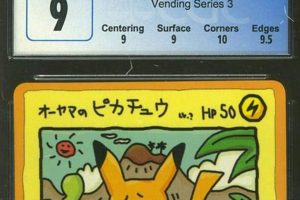



Graded and encapsulated Pokmon cards, often referred to as the encapsulated collectibles, represent a segment of the trading card industry where individual cards are sent to professional grading services. These services assess the condition of the card based on specific criteria such as centering, surface quality, corners, and edges, assigning a numerical grade reflecting its overall state. This grade is then permanently encased in a protective, tamper-evident holder, ensuring preservation and authentication.
The process of grading and encapsulation adds value and security to these collectibles. A higher grade typically translates to increased market value, particularly for rare or sought-after cards. Furthermore, the protective casing safeguards the card from potential damage caused by handling, environmental factors, and improper storage. The graded and sealed format provides assurance of authenticity, mitigating the risk of counterfeit or altered cards, and establishing a trusted secondary market for these items. The rise in popularity can be traced to increased interest in alternative investments and the nostalgia associated with the Pokmon franchise.
The following sections will delve into the intricacies of the grading process, explore the major grading companies, discuss factors influencing value, and provide guidance on purchasing and maintaining these cherished items. An overview of the secondary market will also be provided to offer a deeper understanding of the investment potential involved.
Tips Regarding Encapsulated Pokmon Cards
Acquiring and managing professionally graded and encapsulated Pokmon cards involves a degree of due diligence and informed decision-making. The following tips provide guidance to navigate the market effectively.
Tip 1: Research Grading Companies: Prior to submitting cards for grading, investigate the reputation and grading standards of various grading services. Different companies may have varying criteria, impacting the final grade received.
Tip 2: Understand Grading Criteria: Familiarize yourself with the specific criteria used by grading services, including centering, surface condition, corner sharpness, and edge quality. Accurate self-assessment can improve grading outcomes.
Tip 3: Assess Card Condition Accurately: Carefully examine cards for any imperfections, such as scratches, dents, print lines, or miscuts. These flaws can significantly affect the overall grade.
Tip 4: Protect Ungraded Cards: Before submitting cards, store them in protective sleeves and top loaders to prevent damage during handling and shipping.
Tip 5: Verify Authenticity: Be wary of counterfeit or altered cards. Examine details such as font, color, and holographic patterns to ensure authenticity before purchasing or grading.
Tip 6: Consider Rarity and Demand: Cards with low print runs or high demand typically command higher values, especially when graded favorably. Research market trends to identify potentially valuable cards.
Tip 7: Maintain Proper Storage: Store encapsulated cards in a cool, dry place away from direct sunlight to prevent fading or damage to the plastic casing.
By implementing these strategies, collectors and investors can enhance their understanding of the market and maximize the value of their encapsulated Pokmon card assets. Informed decisions contribute to long-term success within this specialized niche of the collectible market.
The subsequent sections will further discuss the future outlook of the “pokemon slabs” market and offer guidance on building a diversified portfolio.
1. Authenticity Verification

The verification of authenticity forms the bedrock of value and trust within the market for encapsulated Pokmon cards. Given the prevalence of counterfeit cards, authentication processes are essential to ensure the legitimacy of the encased item and maintain market integrity.
- Holographic Pattern Analysis
Genuine holographic Pokmon cards feature intricate patterns and textures unique to the original printing process. Authentication involves scrutinizing the holographic foil for irregularities, distortions, or deviations from established patterns. For example, counterfeit cards often exhibit a pixelated or blurred appearance in the holographic area, a characteristic readily identifiable under magnification. This analysis is a preliminary step in verifying authenticity before submission for grading.
- Ink and Printing Quality Examination
Authentic Pokmon cards are printed using high-quality inks and precise printing techniques. Examination of the ink density, color saturation, and print sharpness can reveal inconsistencies indicative of fraudulent cards. A legitimate card exhibits vibrant colors and clean, crisp lines, while a counterfeit may display faded colors, blurry text, or bleeding of the ink. Microscopic analysis can further reveal inconsistencies in the printing process, such as dot patterns or irregular ink distribution.
- Card Stock Composition Analysis
The card stock used in authentic Pokmon cards possesses a specific weight, thickness, and texture. Counterfeit cards often employ inferior card stock that differs noticeably from the original. Comparing the card stock to known authentic examples, or using specialized instruments to measure its physical properties, can assist in identifying discrepancies. Moreover, the edges of authentic cards exhibit a clean, precise cut, while counterfeit cards may have rough or uneven edges.
- Security Feature Recognition
Certain Pokmon cards, particularly those from later sets, incorporate specific security features such as embedded foil stamps, microprinting, or unique textures. Recognizing these security features and verifying their presence and integrity are crucial steps in authentication. Counterfeiters often struggle to replicate these features accurately, making their absence a strong indication of inauthenticity. Knowledge of these features requires familiarity with the specific sets and print runs of Pokmon cards.
The accuracy and thoroughness of authentication directly impact the value and desirability of encapsulated Pokmon cards. The absence of robust authentication methods would undermine trust and erode the market, highlighting the critical role that these processes play in maintaining the integrity and stability of the industry.
2. Condition Assessment

Condition assessment is a fundamental determinant of value for encapsulated Pokmon cards. The grading process, which results in the creation of a slab, relies heavily on a comprehensive evaluation of a card’s physical state. This assessment directly translates into the numerical grade assigned, impacting market value and collectibility.
- Centering Evaluation
Centering refers to the alignment of the printed image on the card stock. A well-centered card exhibits equal borders on all sides. Misalignment, where the image is shifted significantly to one side, negatively impacts the grade. For example, a card with a 60/40 centering split (60% of the image on one side, 40% on the other) is generally considered acceptable, while more extreme centering issues lead to lower grades and reduced value.
- Surface Integrity Analysis
The surface of a card is scrutinized for imperfections, including scratches, dents, creases, and print defects. Even minor surface flaws can substantially lower the grade, particularly on holographic cards where scratches are more visible. A card exhibiting multiple surface imperfections may receive a grade significantly lower than a card with only minor centering issues.
- Corner and Edge Sharpness Inspection
The condition of a card’s corners and edges is a critical factor in grading. Sharp, undamaged corners and edges are indicative of a well-preserved card. Rounded corners, frayed edges, or the presence of whitening significantly reduce the grade. For instance, a card with one slightly soft corner may receive a lower grade than a card with four sharp corners, regardless of other factors.
- Print Quality Scrutiny
Print quality encompasses the clarity, color vibrancy, and absence of printing errors. Imperfections such as print lines, ink spots, or registration errors detract from the card’s overall condition. A card with vibrant colors and sharp details will generally receive a higher grade than a card with faded colors or noticeable print defects. The presence of “holo bleed,” where the holographic foil encroaches onto the printed image, is a specific type of print defect that lowers the grade.
The collective impact of these facets directly influences the numerical grade assigned during encapsulation. A higher grade signifies a card in superior condition, translating to increased market value. Conversely, imperfections across these categories result in a lower grade and a corresponding reduction in value, emphasizing the importance of accurate and thorough condition assessment for those involved in the acquisition and trading of encapsulated Pokmon cards.
3. Grading Service Reputation

The perceived credibility and established history of a grading service are pivotal factors influencing the valuation and market acceptance of encapsulated Pokmon cards. A service’s reputation directly affects the confidence collectors and investors place in the assigned grade, thereby impacting the card’s liquidity and overall worth.
- Consistency and Stringency of Grading Standards
A grading service’s reputation hinges on the consistent application of its grading standards. Services known for stringent and unbiased evaluations command greater trust. Market participants analyze grading history and population reports to assess the consistency of grading practices. A service perceived as lenient or inconsistent may face skepticism, resulting in reduced market value for its slabs. For example, if a grading service is known to frequently assign a “10” grade to cards that would receive a lower grade from another reputable service, its slabs may be viewed with caution.
- Market Recognition and Brand Equity
Established grading services with significant brand equity and widespread market recognition generally hold greater sway. Services like PSA and Beckett have cultivated strong reputations over decades, earning the trust of collectors and dealers. Their slabs are readily accepted and traded across various platforms, contributing to higher liquidity. A lesser-known or newly established grading service may struggle to gain market traction, even if its grading standards are comparable, simply due to a lack of recognition.
- Holder Security and Tamper-Evident Design
The design and security features of the encapsulation holder contribute to the overall perception of trustworthiness. Tamper-evident designs, holographic labels, and unique serial numbers provide assurance against counterfeiting or grade manipulation. Services with robust security measures instill greater confidence in the authenticity and integrity of the encapsulated grade. Conversely, holders that are easily replicated or compromised can undermine trust and reduce the slab’s value.
- Customer Service and Dispute Resolution
A grading service’s responsiveness to customer inquiries and its approach to resolving grading disputes significantly impacts its reputation. Transparent and fair dispute resolution processes build trust and demonstrate a commitment to accuracy. Services with a history of poor customer service or a reluctance to address grading errors may face negative publicity and a decline in market confidence. Effective communication and a willingness to rectify mistakes are crucial for maintaining a positive reputation.
The intertwining of these factors solidifies the correlation between a grading service’s standing and the economic value assigned to encapsulated Pokmon cards. A sterling reputation provides collectors and investors assurance that assigned grades are reliable and consistent, enhancing the slab’s worth in the market.
4. Market Demand

Market demand exerts a powerful influence on the valuation and liquidity of encapsulated Pokmon cards. The interplay between supply and demand, coupled with collector sentiment, directly dictates the price fluctuations and overall market dynamics within this specialized segment of the collectible market.
- Rarity and Scarcity of Cards
The inherent rarity of a Pokmon card significantly impacts its desirability. Cards with limited print runs, such as promotional releases or error cards, command premium prices due to their scarcity. High grades further amplify this effect; a rare card in pristine condition and encapsulated by a reputable grading service can achieve substantial market value. For example, a graded Base Set Charizard First Edition card, a highly sought-after card, exemplifies this principle. The limited availability of these cards coupled with strong collector demand drives prices upward.
- Nostalgia and Collector Sentiment
Nostalgia plays a crucial role in driving demand for Pokmon cards, particularly those from the initial sets released in the late 1990s and early 2000s. Adult collectors, seeking to recapture childhood memories, often prioritize acquiring cards from these sets, elevating their prices. Collector sentiment, driven by personal attachment and the desire to own iconic cards, contributes to fluctuations in market demand. Shifts in popular opinion and renewed interest in specific Pokmon characters can trigger surges in demand for related cards.
- Influence of Media and Popular Culture
Media exposure and popular culture trends can exert a significant influence on market demand. New Pokmon video game releases, animated series, or promotional partnerships can generate renewed interest in the franchise, leading to increased demand for related trading cards. High-profile auctions or media coverage of record-breaking sales can further amplify market interest and drive up prices. The visibility and popularity of the Pokmon brand contribute to a sustained level of demand, creating a stable market for encapsulated cards.
- Economic Factors and Investment Trends
Broader economic factors and investment trends can also impact the market for encapsulated Pokmon cards. During periods of economic uncertainty, investors may seek alternative assets, including collectibles, as a hedge against inflation or market volatility. The perception of encapsulated Pokmon cards as a potential investment vehicle can drive demand and contribute to price appreciation. However, economic downturns can also lead to decreased discretionary spending, impacting the demand for non-essential items like collectibles.
The confluence of these facets underscores the complex relationship between market demand and the valuation of encapsulated Pokmon cards. Understanding these dynamics is essential for collectors and investors seeking to navigate this dynamic market and make informed decisions.
5. Long-Term Preservation

Encapsulation, the defining characteristic of the collectible form, serves as the primary mechanism for long-term preservation. This process effectively isolates the card from detrimental environmental factors, thereby mitigating the risk of degradation. Exposure to ultraviolet radiation, humidity fluctuations, and physical handling are all known contributors to the deterioration of card stock, inks, and surface condition. The rigid, inert plastic casing creates a protective barrier, significantly reducing the impact of these agents of decay. For instance, a Base Set Charizard, subjected to unprotected storage, may exhibit fading, corner wear, and surface scratches within a relatively short period. In contrast, an encapsulated version of the same card, properly stored, can maintain its original condition for decades, preserving its value and collectibility. The physical barrier shields the fragile components from everyday wear and tear.
Beyond physical protection, encapsulation provides an element of security against tampering and fraudulent alterations. The tamper-evident seal ensures the card’s condition remains consistent with the grade assigned at the time of encapsulation. This aspect is particularly critical in a market where even minor alterations can substantially affect value. Consider the scenario of a card with slightly frayed edges. Without encapsulation, these flaws could be subtly concealed or even repaired, potentially leading to misrepresentation. Encapsulation ensures the integrity of the assessment, offering buyers confidence in the authenticity and stated condition of the collectible. This built-in safeguard directly impacts the trustworthiness and longevity of encapsulated collectibles as viable assets.
Ultimately, the practice of encapsulation directly supports the long-term viability of the market. Preserving the condition of cards through robust protection and safeguarding against fraud builds confidence among collectors and investors. This, in turn, encourages continued participation and sustained value appreciation. Challenges remain, such as the potential for degradation of the plastic casing itself over extremely long time scales or the need for improved storage conditions to mitigate the effects of temperature fluctuations. Nevertheless, the practice of encapsulation represents a foundational principle within the collectible market, ensuring that tangible assets retain their value and appeal for future generations.
Frequently Asked Questions about Encapsulated Pokmon Cards
The following questions address common inquiries and misconceptions surrounding graded and encapsulated Pokmon cards, providing a clear understanding of the practices and considerations involved.
Question 1: What precisely does the encapsulation process entail?
Encapsulation involves submitting a Pokmon card to a professional grading service. The service assesses the card’s condition based on factors such as centering, surface quality, corners, and edges. A numerical grade is assigned reflecting the overall condition, and the card is sealed within a tamper-evident, protective plastic holder.
Question 2: Why are some grading services considered more reputable than others?
Reputation stems from the consistency and stringency of grading standards, market recognition, historical performance, and the security features of the encapsulation holder. Services with a long-standing history of accurate and unbiased assessments command greater trust.
Question 3: Does encapsulation guarantee an increase in a card’s market value?
While encapsulation typically enhances value, it is not guaranteed. The degree of increase depends on the card’s rarity, its condition (as reflected by the assigned grade), and current market demand. A low-grade card, even if encapsulated, may not see a significant value increase.
Question 4: What factors should be considered when purchasing encapsulated cards?
Verify the authenticity of the card and the reputation of the grading service. Examine the card’s grade and condition details provided by the service. Compare prices across different vendors and consider the long-term market potential of the specific card.
Question 5: How should encapsulated cards be stored to maintain their condition?
Encapsulated cards should be stored in a cool, dry place away from direct sunlight and extreme temperature fluctuations. Avoid stacking or placing heavy objects on top of the encapsulated cards to prevent potential damage to the plastic holder.
Question 6: Is it possible to re-grade an encapsulated card?
Yes, an encapsulated card can be submitted to a different grading service for re-grading. However, this involves breaking the existing encapsulation, which may carry some risk. The potential benefits of re-grading should be carefully weighed against the associated costs and risks.
In conclusion, understanding the nuances of the encapsulation process, grading service reputations, and market dynamics is essential for collectors and investors involved with graded Pokmon cards.
The next section will address the future of the encapsulated Pokmon card market, analyzing emerging trends and potential investment opportunities.
Conclusion
The preceding analysis has explored the multifaceted world of “pokemon slabs,” encompassing grading processes, authentication standards, market influences, and preservation techniques. Key considerations for participants in this market include evaluating grading service reputations, understanding condition assessment criteria, and recognizing the impact of rarity and demand on valuation. These factors collectively contribute to the perceived value and long-term viability of encapsulated collectibles.
As the market continues to evolve, a discerning approach and informed decision-making are paramount. A comprehensive understanding of these elements facilitates responsible collecting and investment strategies, thereby navigating the complexities of this specialized segment. Continued due diligence and adherence to best practices remain critical for sustainable engagement within the realm of graded and encapsulated collectible cards.