


A digital application replicating the combat mechanics of the Pokmon video game series allows individuals to experiment with team compositions, strategies, and move sets without the constraints of in-game resource limitations or time investment. For instance, users can simulate matches between various Pokmon teams to evaluate their effectiveness against different opponents.
This type of software offers several advantages, including accelerated learning of game mechanics, efficient team building, and the ability to test theoretical scenarios that might be impractical or impossible to replicate in the core games. These applications have evolved from simple text-based programs to sophisticated graphical interfaces, reflecting the increasing complexity of the simulated battles and the user’s desire for a more immersive experience.
The subsequent sections will delve into the functionalities commonly found in these applications, the underlying algorithms that govern their behavior, and the impact they have on competitive Pokmon play.
Strategies for Effective Simulated Pokemon Battles
The following guidelines provide insight into maximizing the utility of virtual Pokmon combat environments for training and analysis.
Tip 1: Master Type Matchups: Prioritize a thorough understanding of type effectiveness charts. Knowing which types are strong or weak against others is fundamental to making informed decisions during simulated battles.
Tip 2: Analyze Move Sets: Evaluate the available moves for each Pokmon, considering factors like power, accuracy, and secondary effects. Strategic selection of moves can significantly impact the outcome of a simulated encounter.
Tip 3: Understand Stat Distributions: Account for the distribution of stats such as Attack, Defense, Speed, Special Attack, and Special Defense. Recognize that certain Pokmon are tailored for specific roles based on their stat allocations.
Tip 4: Simulate Diverse Scenarios: Avoid repetitive simulations against the same teams or opponents. Expose the simulated team to a wide range of strategies and Pokmon to identify potential weaknesses.
Tip 5: Utilize Damage Calculation: Employ damage calculation tools to predict the outcome of specific attacks. This enables a more data-driven approach to team building and strategic decision-making.
Tip 6: Consider Held Items: Remember the impact of held items on the performance of Pokmon. Simulate battles with various item combinations to determine the most effective choices for a given team composition.
Tip 7: Optimize EV and IV Allocation: Experiment with different Effort Value (EV) and Individual Value (IV) spreads to fine-tune a Pokmon’s stats. Subtle adjustments can lead to significant improvements in performance.
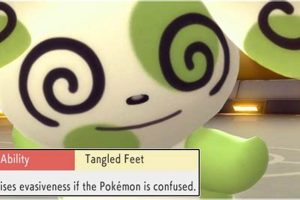
Tip 8: Learn About Abilities: A Pokemon’s ability can significantly alter the flow of battle. Understanding how to utilize them, and how to play around your opponent’s, is critical.
By applying these principles, individuals can leverage digital combat replicas to improve their knowledge of the game and enhance their overall competitive ability.
The next segment will explore advanced functionalities often found in more sophisticated simulation applications.
1. Type matchups

In applications replicating Pokmon combat, type matchups function as a core determinant of battle outcomes. The effectiveness of a Pokmon’s attack is directly governed by its type in relation to the defending Pokmon’s type, creating a complex web of strengths and weaknesses. For instance, a Fire-type attack inflicts double damage against a Grass-type Pokmon, whereas a Water-type attack is only half as effective. These relationships are crucial to simulating accurate battle results. Type matchups are implemented as a fundamental algorithm within these applications, dictating damage multipliers and influencing move selection strategies within the simulation.
The accuracy of the type matchup simulation is paramount to the utility of the entire application. Without precise replication of these type interactions, the simulated battles will generate skewed outcomes, leading to inaccurate strategic insights. For example, if a simulation fails to correctly apply the double damage multiplier for a super-effective attack, it may underestimate the offensive capabilities of certain Pokmon or misrepresent the viability of particular team compositions. The inclusion of abilities like Levitate, which negate Ground-type weaknesses, or items like the Air Balloon, which temporarily grant immunity to Ground-type attacks, further underscore the intricate connection between type matchups and simulated combat.
In summary, type matchups serve as an indispensable component within the framework of digital Pokmon combat replicas. The correct implementation and consistent application of type effectiveness charts are essential for creating realistic battle simulations and thereby providing meaningful strategic data to the user. Any deviation from the established type chart negatively impacts the reliability and value of the virtual combat environment.
2. Move Selection

Within a replicated Pokmon combat environment, move selection constitutes a critical decision-making process that directly impacts simulated battle outcomes. The available movesets, their properties, and the player’s strategic choices collectively determine the success or failure of a simulated Pokmon team.
- Damage Output and Type Coverage
The primary consideration in move selection involves optimizing damage output while ensuring adequate type coverage. A diverse moveset enables a Pokmon to effectively target various opposing types, mitigating the risk of being walled by a single resistant type. For example, a Water-type Pokmon might benefit from Ice-type coverage to address Grass-type opponents. The implementation of damage formulas within the simulation accurately reflects the impact of move power, type effectiveness, and stat modifiers on the resulting damage values. The choice of coverage moves directly impacts simulated success rates.
- Status Effects and Utility Moves
Beyond direct damage, status-inducing moves such as paralysis, poison, and burn offer strategic advantages by crippling opposing Pokmon and altering the flow of battle. Utility moves, including those that boost stats, provide protection, or manipulate the battlefield environment, add further complexity to move selection. For instance, a Pokmon might utilize a stat-boosting move to increase its offensive potential or employ a protective move to stall for time. The simulation models the effects of these moves, factoring in accuracy, duration, and potential side effects. These considerations are critical for creating an accurate model.
- Move Priority and Speed Control
Move priority, which determines the order in which moves are executed, introduces an additional layer of strategic depth to move selection. High-priority moves, such as Quick Attack, allow a Pokmon to act before slower opponents, potentially securing a crucial knockout or disrupting an opponent’s strategy. Similarly, moves that manipulate speed, such as Agility or Icy Wind, can influence the turn order and grant a strategic advantage. The battle simulator accurately models the effects of move priority and speed modifiers, ensuring that the simulated turn order aligns with the game’s mechanics. The accurate representation is critical to the simulation.
- Accuracy and Reliability
Move accuracy plays a vital role in determining the reliability of a move. Moves with lower accuracy carry the risk of missing, potentially squandering a crucial turn. Conversely, moves with perfect accuracy offer consistent damage output but may lack the power or secondary effects of less accurate alternatives. The simulation incorporates accuracy checks, based on move accuracy and evasion modifiers, to determine whether a move connects with its target. Therefore, players must balance the desire for high-powered moves with the need for consistent reliability in the digital battle replica.
The interconnectedness of damage output, status effects, move priority, and accuracy in digital replicas of Pokmon combat underlines the importance of thoughtful move selection in this environment. An evaluation of these factors is essential for maximizing the simulated team’s competitive effectiveness and replicating real-world battle dynamics. These decisions greatly affect the outcomes and are critical to accurately modeling a real battle.
3. Stat Distribution

In digital representations of Pokmon combat, stat distribution serves as a fundamental attribute defining a Pokmon’s capabilities and strategic role. Each Pokmon possesses six core stats: HP (Hit Points), Attack, Defense, Special Attack, Special Defense, and Speed. The specific allocation of these stats dictates a Pokmon’s strengths and weaknesses, influencing its performance in simulated battles. A Pokmon with high Attack and Speed, but low Defense, is optimized for aggressive, offensive strategies, while one with high Defense and HP is better suited for a more defensive, supportive role. These attributes govern damage calculation and determine the turn order, making them essential considerations in the simulation process. The accuracy with which these values are replicated directly affects the validity of simulated battle outcomes.
The distribution of these stats has a direct effect on the outcomes of simulated engagements. For instance, a Pokmon with high Speed and Special Attack might consistently out-speed and OHKO (one-hit knockout) slower, more defensively oriented opponents. Conversely, if the simulation erroneously assigns inflated defensive stats to a typically frail Pokmon, it may drastically alter the simulated battle dynamics, leading to unrealistic and misleading results. Team building within the simulation environment requires a careful evaluation of stat distributions to create a balanced roster capable of withstanding various offensive threats and capitalizing on strategic opportunities. A team composed solely of high-Attack, low-Defense Pokmon might quickly fall to a well-constructed defensive team, highlighting the need for nuanced assessment.
Ultimately, the faithful replication of stat distributions is crucial for creating a reliable Pokmon combat environment. The simulated battle’s accuracy hinges on the precision with which the core stats are implemented and utilized within the damage calculation algorithms. An understanding of these fundamental principles allows individuals utilizing these simulation tools to make better informed decisions about team construction and strategic play, thereby improving their overall competitive capability. Challenges in accurate stat representation, stemming from incomplete or outdated data sets, can undermine the efficacy of the simulation and necessitate ongoing updates and revisions.
4. Ability effects

The accurate simulation of Pokmon Abilities is paramount to the fidelity and strategic depth of any digital battle replica. Abilities often fundamentally alter how a Pokmon functions in combat, requiring precise modeling within the simulation environment.
- Passive Stat Modifications
Some Abilities, such as Huge Power or Technician, passively augment a Pokmon’s stats or move properties. Huge Power doubles the Attack stat of the Pokmon possessing it, dramatically increasing its offensive potential. Technician boosts the power of moves with a base power of 60 or less by 50%. Such Abilities necessitate accurate stat recalculations within the simulator to reflect their impact on damage output and battle dynamics. A simulation failing to account for these passive boosts would significantly underestimate the effectiveness of Pokmon reliant on these Abilities.
- Status Condition Interactions
Abilities like Immunity or Guts interact directly with status conditions. Immunity prevents a Pokmon from being poisoned, while Guts increases Attack by 50% when the Pokmon is afflicted with a status condition. The accurate simulation of these interactions requires tracking status condition application and removal, as well as conditional stat modifications. A flawed simulation might incorrectly allow a Pokmon with Immunity to be poisoned or fail to activate the Guts boost when the Pokmon is afflicted, leading to inaccurate battle results.
- Weather and Terrain Effects
Certain Abilities, such as Drizzle or Sand Stream, automatically summon weather or terrain effects upon entering battle. Drizzle summons rain, while Sand Stream summons a sandstorm. These weather and terrain conditions can modify move power, alter type effectiveness, and trigger other Ability effects. A realistic simulator must accurately implement these persistent environmental changes and their cascading consequences. The simulator not reflecting Weather or Terrain would diminish the overall realism.
- On-Switch and Conditional Triggers
Abilities such as Intimidate activate when a Pokmon switches into battle, lowering the opponent’s Attack stat. Others, like Moxie, increase Attack when the Pokmon knocks out another Pokmon. Properly modeling these Abilities requires tracking switch-in events, knockout events, and applying the appropriate stat modifications or effects accordingly. A battle replica that fails to accurately implement these conditional triggers will misrepresent the impact of these Abilities on the battle’s momentum.
The intricate and varied effects of Abilities highlight the importance of accurate simulation in Pokmon combat replicas. Correctly modeling these interactions is essential for providing users with a reliable and insightful training and analysis tool. Simulating Abilities and outcomes accurately can lead to real-world competitive success.
5. Item optimization
Item optimization, within the context of digital applications replicating Pokmon combat, represents a pivotal factor influencing simulated battle outcomes. Held items confer a diverse range of effects, from passively boosting stats to triggering strategic maneuvers, thereby directly impacting a Pokmon’s effectiveness in a simulated environment. For instance, equipping a Choice Scarf to a Pokmon increases its Speed, enabling it to outpace opponents and potentially secure a crucial first attack. Failure to accurately simulate the effects of held items can lead to skewed results and flawed strategic insights. The utility of a given item is often conditional; a Life Orb increases damage output at the expense of HP, a trade-off best suited to offensive Pokmon that can quickly KO opponents, while a Leftovers item offers gradual HP recovery, favoring more defensive builds.
The importance of item optimization is further illustrated by the diverse array of available items and their specific functionalities. Sitrus Berries provide a one-time HP recovery boost when a Pokmon’s HP falls below a certain threshold, potentially turning the tide of a battle. Choice items, such as Choice Band and Choice Specs, significantly increase Attack or Special Attack, respectively, but restrict the user to a single move. The decision to equip a particular item requires careful consideration of a Pokmon’s stats, movepool, and intended role within the simulated team. A well-optimized item set can transform a mediocre Pokmon into a formidable threat, while a poorly chosen item can render a powerful Pokmon ineffective. Simulated battles, therefore, serve as valuable tools for experimenting with different item combinations and assessing their impact on overall team performance.
In summary, accurate modeling of held items and their associated effects is essential for creating a realistic Pokmon combat replica. Item optimization is not merely an accessory to the simulation; it constitutes an integral component of the strategic decision-making process. The challenge lies in developing algorithms that accurately replicate the complex interactions between items, Pokmon stats, and move properties. Successful item optimization hinges on a deep understanding of both the game’s mechanics and the specific capabilities of the simulated team, ultimately enabling the derivation of meaningful strategic insights and enhancing competitive performance.
6. EV/IV allocation

The strategic distribution of Effort Values (EVs) and Individual Values (IVs) represents a foundational element in competitive Pokmon, significantly influencing the capabilities of virtual combatants within a simulated environment. Proper allocation maximizes specific stats, tailoring Pokmon to particular roles.
- Impact on Stat Customization
EVs, earned through battling, allow players to enhance specific stats, with a maximum of 510 EVs distributable across all stats and a cap of 252 EVs per stat. IVs, inherent and immutable values ranging from 0 to 31 for each stat, contribute directly to a Pokmon’s base stats. In a Pokmon battle simulator, precise EV/IV allocation permits customization of a team to optimally counter predicted opponents and strategies. For instance, allocating 252 EVs to Speed allows a Pokmon to outpace certain threats, while maximizing Attack or Special Attack, combined with a corresponding 31 IV, enhances damage output.
- Role in Damage Calculation
The interplay of EVs and IVs directly affects the damage calculation within a Pokmon battle simulator. A Pokmon with higher Attack and a favorable IV/EV spread will inflict more damage, potentially securing a one-hit knockout. These calculations are replicated within the simulator, allowing users to observe the impact of stat investment on damage output across different matchups. Accurately modeling this interaction is crucial for assessing the viability of different EV/IV spreads and predicting battle outcomes.
- Strategic Team Composition
Effective team composition in the context of a Pokmon battle simulator requires careful consideration of EV/IV allocation for each team member. A balanced team typically features Pokmon with varying stat distributions, optimized for different roles, such as offensive sweepers, defensive walls, and support specialists. Strategic EV/IV allocation enables a user to fine-tune these roles, maximizing team synergy and covering potential weaknesses. Simulated battles allow for testing different team compositions and identifying optimal stat distributions for various strategic approaches.
- Influence on Speed Tiers
Speed is a critical stat in Pokmon combat, determining which Pokmon attacks first. EV/IV allocation is often used to optimize Speed, allowing a Pokmon to outspeed specific threats or fall just below them, creating opportunities for strategic maneuvers. Speed tiers, representing ranges of Speed values, are carefully considered by competitive players. A Pokmon battle simulator allows users to experiment with different EV/IV spreads to achieve specific Speed tiers, maximizing strategic control and optimizing turn order within simulated battles.
The interrelationship between EV/IV allocation and Pokmon battle simulators is significant. The simulators enable users to test different combinations of EVs and IVs, demonstrating directly the tangible effects of these choices on a Pokmon’s performance, which informs real-world competitive strategies. These applications provide a sandbox environment for optimization that would be prohibitively time-consuming or impractical in the core games.
7. Damage calculation
Damage calculation forms the bedrock of any functional application replicating Pokmon combat. The accuracy and complexity of the damage formula directly determine the fidelity with which battles are simulated, impacting the reliability of the simulator as a tool for strategic analysis and team building.
- Base Power and Move Properties
The foundational step involves determining a move’s base power, a numerical value indicating its inherent strength. This value is then modified by factors such as type effectiveness, critical hits, and Abilities. For example, a move with a high base power like Hyper Beam will inflict substantial damage, assuming other factors are favorable. The inclusion of move properties, like whether a move is physical or special, interacts with the attacking and defending Pokmon’s respective Attack and Special Attack/Defense stats. Within a combat replica, accurately simulating base power and move properties is crucial for establishing a baseline level of damage calculation.
- Type Effectiveness and STAB (Same-Type Attack Bonus)
Type matchups constitute a critical component of the damage formula. A move that is super effective against the target receives a damage multiplier, typically 2x in single battles. Conversely, a not-very-effective move receives a reduced multiplier, typically 0.5x. STAB, applied when a Pokmon uses a move of the same type as itself, grants a 1.5x damage multiplier. A Fire-type Pokmon using Flamethrower, therefore, benefits from STAB, and the calculation must account for these dynamic type interactions. Damage calculation must correctly implement a type chart.
- Stat Modifiers and Critical Hits
Stat modifiers, arising from moves like Swords Dance or Screech, can significantly alter the damage output. A Swords Dance, which increases Attack by two stages (doubling it), dramatically boosts the damage inflicted by physical attacks. Critical hits bypass negative stat modifiers on the attacker and inflict 1.5x damage. Furthermore, Abilities and Items further interact with damage outcome. The simulator must track these modifiers throughout the duration of the simulated battle, including modifiers to stats and critical-hit ratio.
- Randomization and Defensive Factors
A degree of randomization is introduced into the damage calculation, typically a random number between 85 and 100 percent. This adds a level of uncertainty, reflecting the inherent variability within the game. Defensive stats, HP, and Abilities are considered. The simulator needs to accurately combine randomization factors with stat variables.
These factors combined provides a realistic framework that Pokmon battle simulators utilize, forming the basis for simulating combat with accuracy.
Frequently Asked Questions About the Pokmon Battle Simulator
This section addresses common inquiries regarding digital applications that replicate Pokmon combat mechanics.
Question 1: What is a Pokmon battle simulator?
A Pokmon battle simulator is a software application designed to replicate the combat mechanics of the Pokmon video game series. It allows users to create teams of Pokmon, select moves, and simulate battles against other teams, either controlled by the application’s AI or by another user.
Question 2: How accurate are the battle simulations?
The accuracy of the battle simulations depends on the sophistication of the damage calculation algorithms and the completeness of the data sets used. A well-designed simulator should accurately replicate type matchups, stat calculations, ability effects, and item interactions to provide a realistic combat experience.
Question 3: What are the primary benefits of using a Pokmon battle simulator?
Benefits include the ability to experiment with team compositions, test strategies, and learn about game mechanics without the time investment or resource constraints of the core games. It facilitates efficient team building and provides a platform for analyzing battle scenarios.
Question 4: What features are typically included in a Pokmon battle simulator?
Common features include a team builder, move selection interface, damage calculator, battle log, and options for customizing battle conditions. More advanced simulators may also include features like EV/IV optimization tools and AI opponents with adjustable difficulty levels.
Question 5: Are Pokmon battle simulators legal to use?
The legality of using Pokmon battle simulators depends on their compliance with copyright laws. Simulators that use copyrighted assets without permission may be considered illegal. However, simulators that are built from scratch and do not infringe on existing copyrights are generally considered legal to use.
Question 6: How do Pokmon battle simulators contribute to competitive play?
These tools aid competitive players by providing a platform for testing team compositions, practicing strategies, and analyzing match-ups. They help to identify weaknesses in a team and refine battle tactics, ultimately improving a player’s overall competitive ability.
In summary, Pokmon battle simulators offer a valuable resource for both casual and competitive players, providing a platform for learning, experimentation, and strategic analysis.
The following section will explore the ethical considerations surrounding the use of these simulators.
Conclusion
This exploration of the Pokmon battle simulator demonstrates its utility as a tool for strategic analysis and competitive preparation. Key functionalities, including type matchup calculations, move selection, stat distribution, ability effects, item optimization, EV/IV allocation, and damage calculation algorithms, collectively contribute to the accuracy and efficacy of these virtual combat environments. The degree to which these features are accurately implemented directly correlates with the value derived from the simulation.
As technology advances, one can anticipate further refinement of these applications, potentially incorporating machine learning to create more adaptive and challenging AI opponents. The continued development and responsible utilization of the Pokmon battle simulator will undoubtedly shape the future of competitive Pokmon, providing enthusiasts with the means to rigorously test hypotheses and optimize team builds, ensuring a more informed and strategic approach to the game.